KLARNA
“Ads Manager”: Building a Self-Serve Advertising Platform from Zero
“Ads Manager”: Building a Self-Serve Advertising Platform from Zero
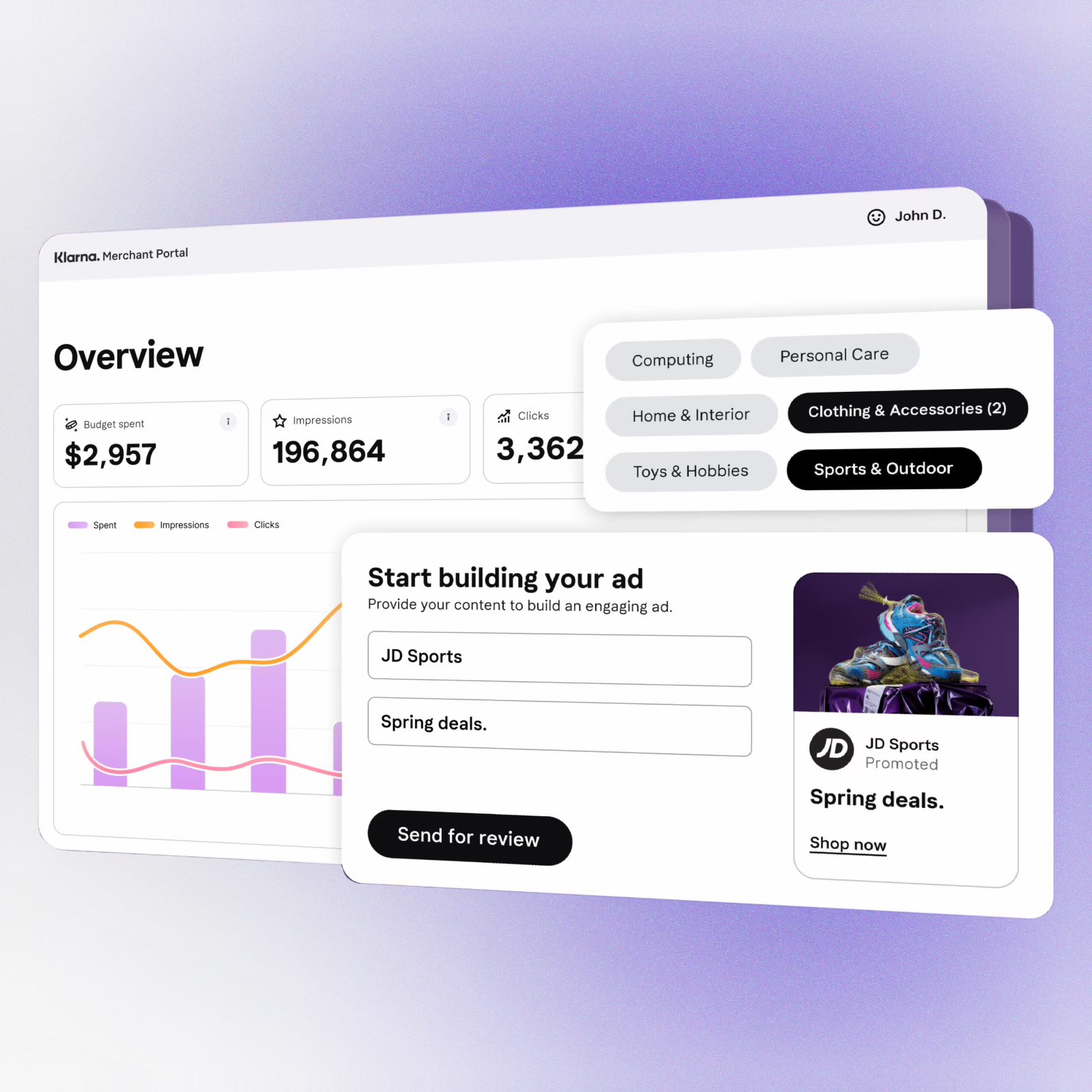
0→1 product design. I spotted an advertising opportunity that didn't exist as a product, built the case for it, and shaped the vision that took it to 70K+ advertisers with CTRs up to 25× industry benchmarks — contributing to 131% YoY marketing revenue growth.
Problem
The highly manual and time-consuming process of re-entering redundant information across different teams for publishing and managing ads, hindering efficiency and causing delays in campaign launches.
Goal
To streamline the user flow, automate the process, and create a self-service ads management tool to improve efficiency, reduce costs, and enhance the overall user experience for advertisers.
To streamline the user flow, automate the process, and create a self-service ads management tool to improve efficiency, reduce costs, and enhance the overall user experience for advertisers.
Role
Staff Product Designer / Acting PM
Staff Product Designer / Acting PM
Responsibilities
Identifying the opportunity, building the case for it with leadership, defining product vision and strategy, leading discovery and research, and shaping the platform through to launch readiness.
Identifying the opportunity, building the case for it with leadership, defining product vision and strategy, leading discovery and research, and shaping the platform through to launch readiness.

Acting Product Manager
Nobody owned this problem yet. I built the case myself, took it to stakeholders as an informal product lead, and secured buy-in to pursue it — effectively acting as the product manager for this opportunity before the role existed on paper.
Timeline
From 0-to-1, it took 6 months. Starting in late 2022, the official first launch was at the beginning of 2023. Product support needs of 500K business users. Presented here, the discovery stage took about 2-3 months.
1.
INTRODUCTION
Toplooks.ai Team
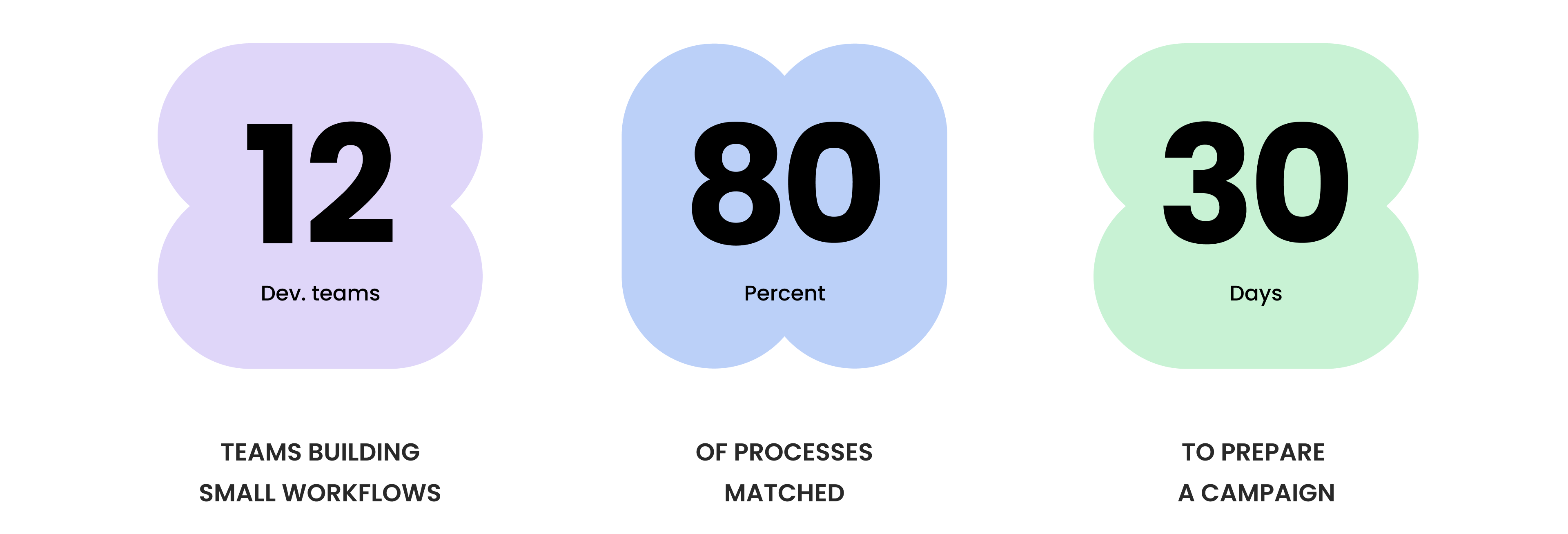
I joined Klarna's Media domain working on Toplooks.ai, an AI content-generation product for advertisers. When that initiative paused, I moved to the Advertisement Platform team — and it was there, working across teams, that I spotted a pattern nobody had named yet: every team was solving a small piece of the same customer flow, and advertisers were re-entering roughly 80% of the same information over and over. That redundancy was the opportunity.

Advertisement
Platform
Platform
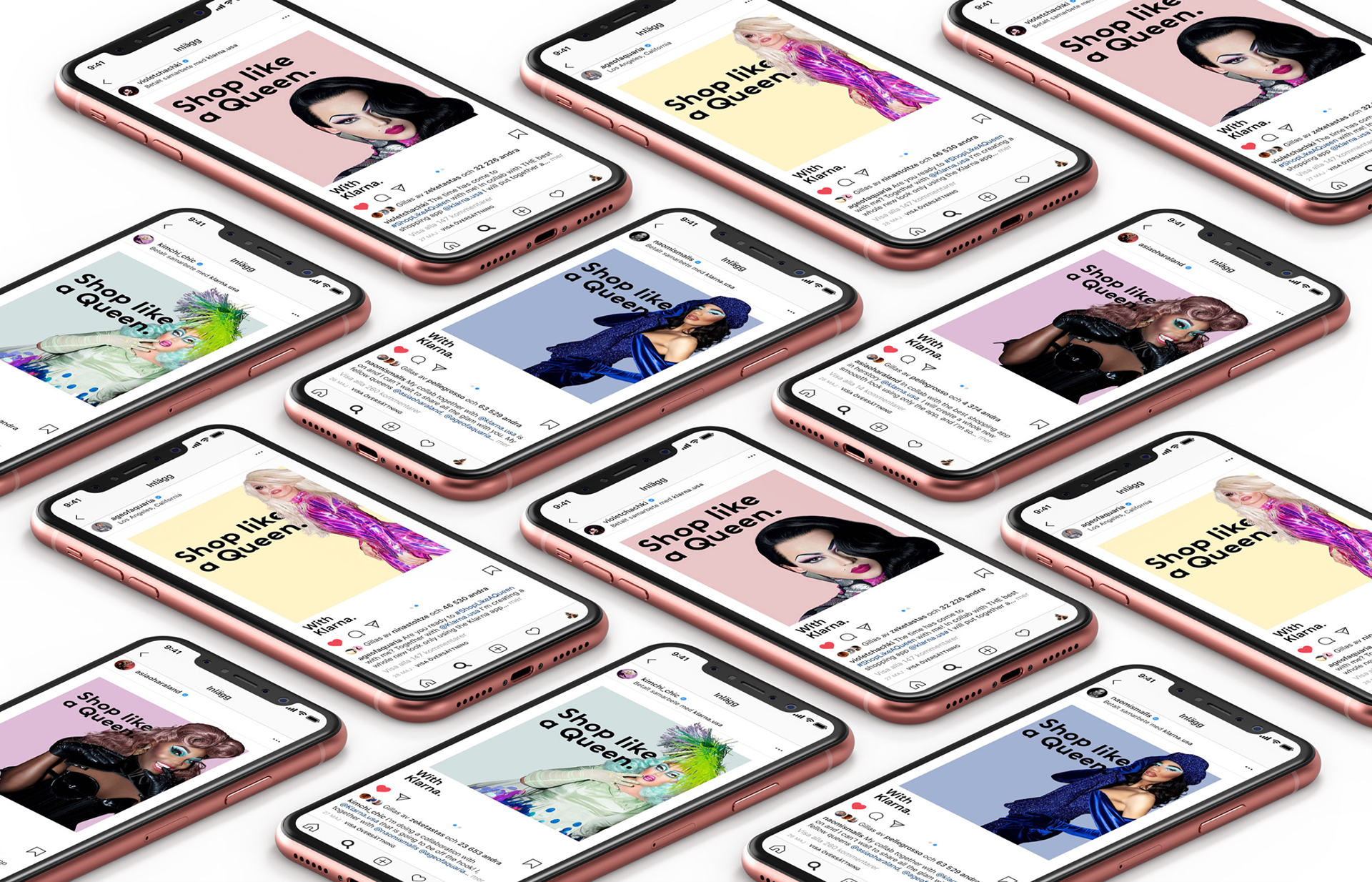
Publishing and managing ads through various platforms (Instagram, FB, Klarna, etc.)
While my team at Toplooks.ai was on hold, I volunteered to assist the Advertisement Platform Team with the development of a new product.
This product was focused on publishing and managing ads across various platforms, such as Instagram and Facebook. As a product designer, I worked closely with the team to understand the user needs and identify opportunities to improve the overall user experience.

DOMAIN
PROCESSES
PROCESSES
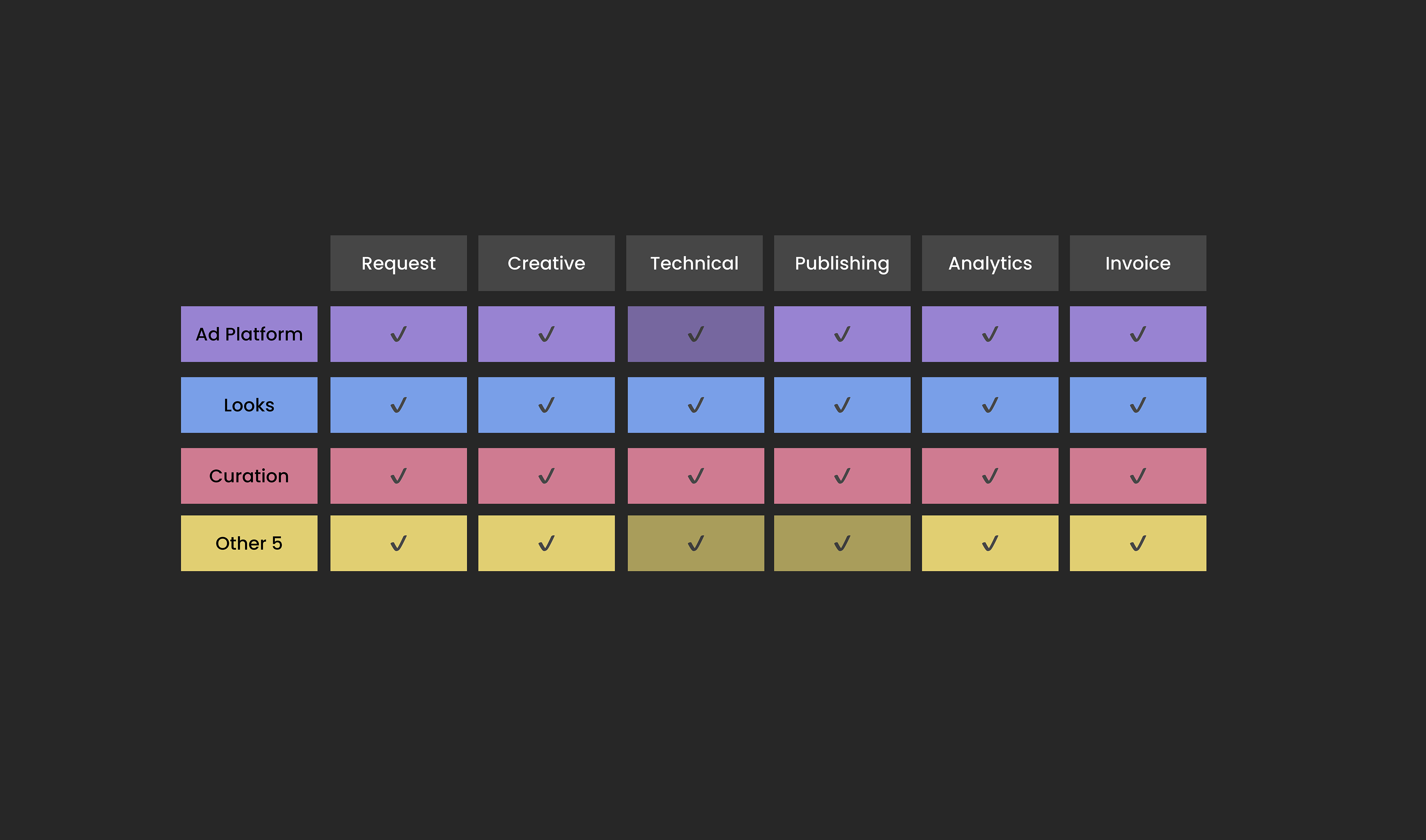
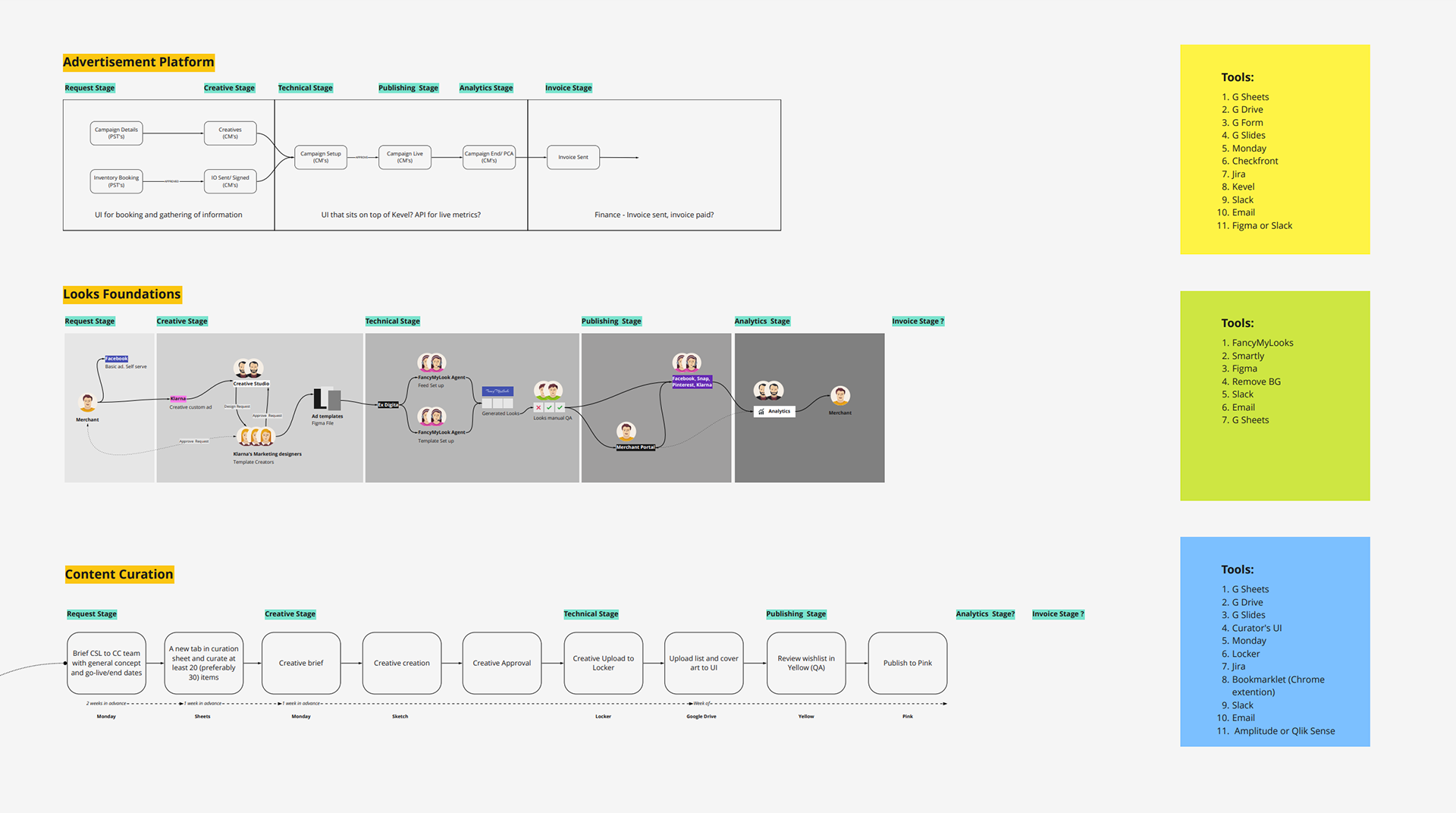
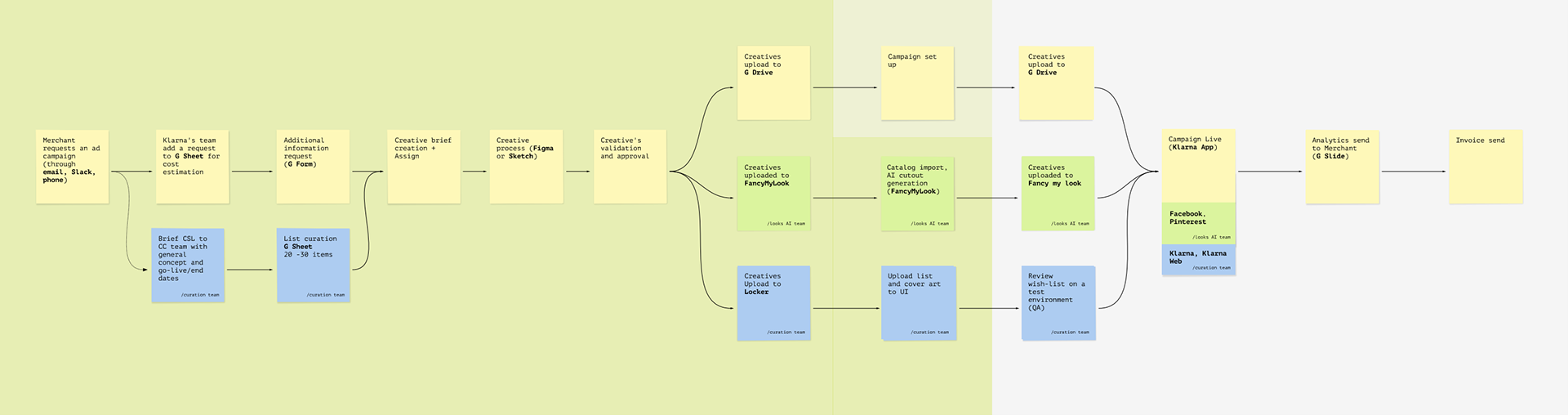
Throughout my work, I discovered a pattern: all development teams were working on a small piece of the same customer flow, requiring ads managers to re-enter about 80% of the same information repeatedly. The process was predominantly manual and consumed a lot of time, making it difficult to support smaller merchants and taking up to a month to publish a campaign.
2.
Opportunity
ADS CAMPAIGN
RESEARCH
RESEARCH
As a result of this work, I identified an opportunity to streamline the user flow and automate the process, which could potentially reduce costs, save time, and improve the overall user experience.
• Similar problems and solutions
• Similar processes
• Same roles and databases
• Similar problems and solutions
• Similar processes
• Same roles and databases
EXISTING
WORKFLOW
WORKFLOW
It is crucial to evaluate current workflows in order to increase efficiency, enhance quality, align with business objectives, facilitate growth, improve employee morale, and promote a culture of ongoing advancement.
During my research, I identified:
• Bottlenecks, redundancies, or inefficiencies that may be hindering productivity
• Any potential errors, gaps, or inconsistencies in the existing processes. Enhance the quality and accuracy of the work.
• Misalignments throughout the entire workflow.
• Where scalability may be challenging and we need to make necessary adjustments to ensure smooth operations as the business expands.
• The level of employee satisfaction and engagement, which is crucial for creating a positive work environment.
• Areas for enhancement and innovation.
During my research, I identified:
• Bottlenecks, redundancies, or inefficiencies that may be hindering productivity
• Any potential errors, gaps, or inconsistencies in the existing processes. Enhance the quality and accuracy of the work.
• Misalignments throughout the entire workflow.
• Where scalability may be challenging and we need to make necessary adjustments to ensure smooth operations as the business expands.
• The level of employee satisfaction and engagement, which is crucial for creating a positive work environment.
• Areas for enhancement and innovation.
3.
DISCOVERY
AND RESEARCH
AND RESEARCH
COMPETITORS
ANALYSIS
ANALYSIS
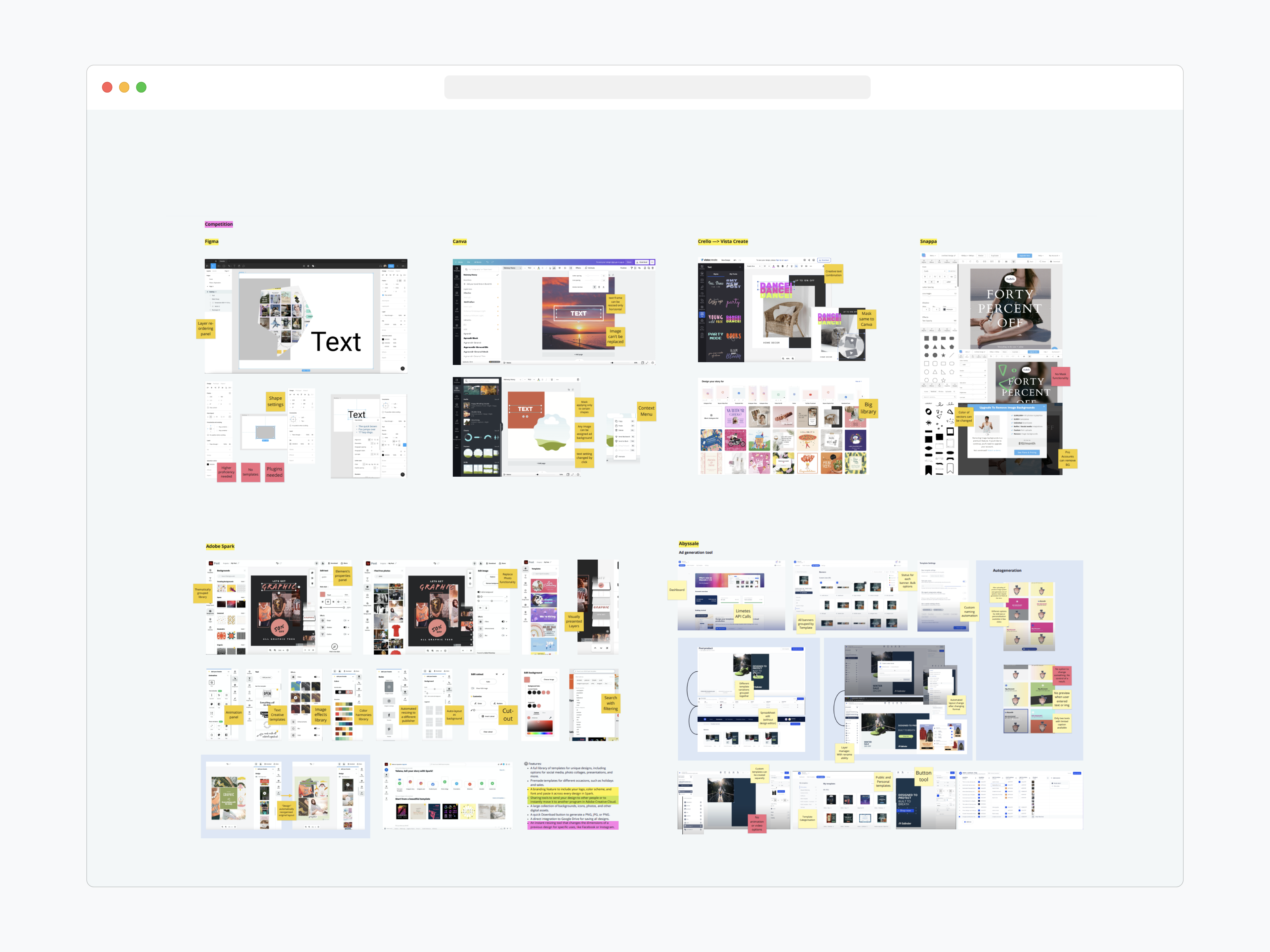
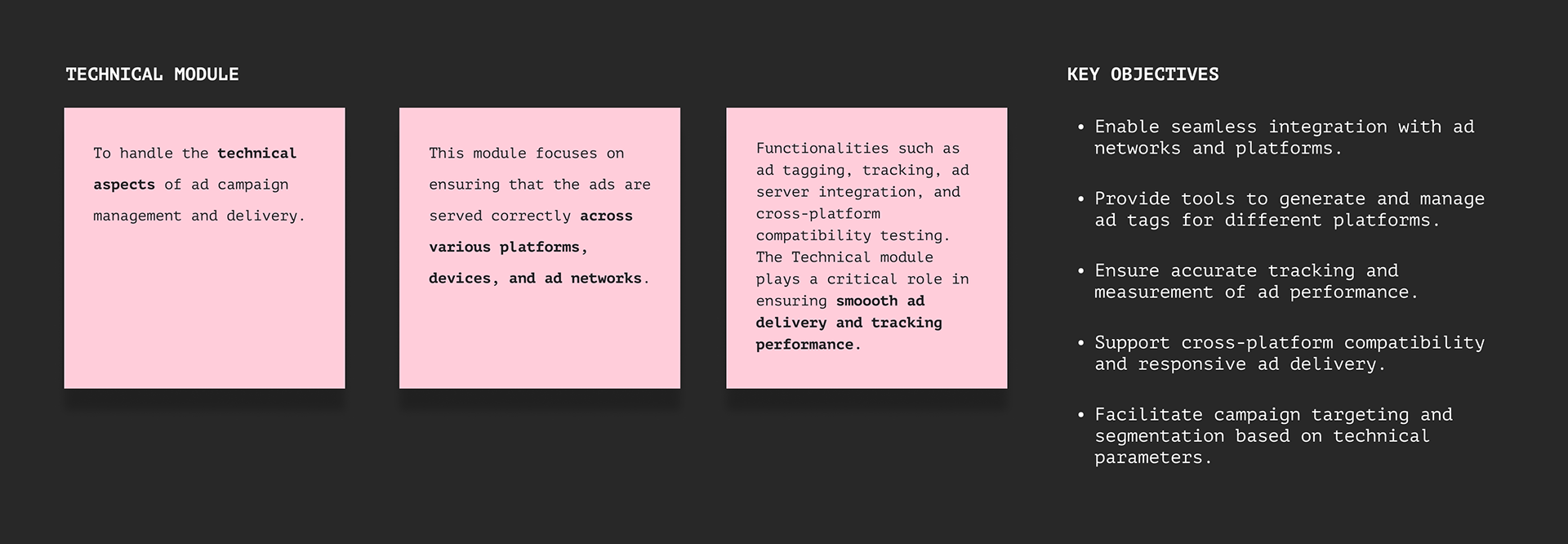
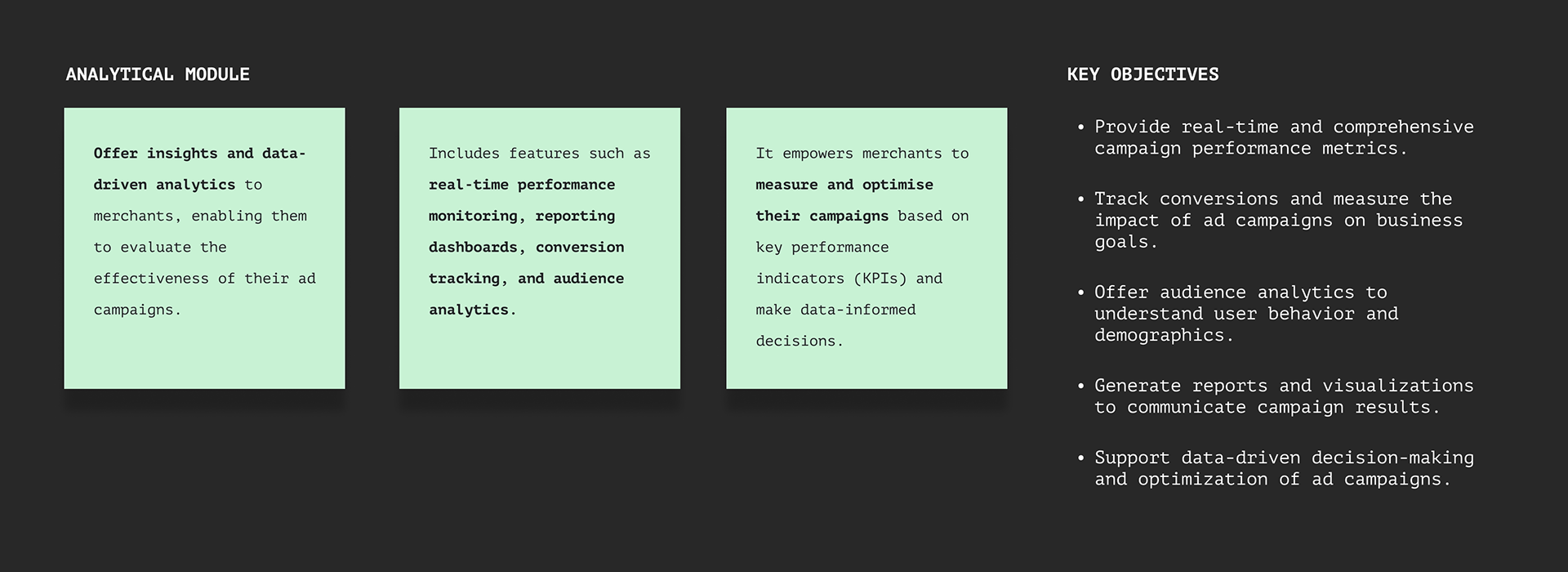
The product potentially will have multiple modules so there is a wide range of competitors. So I separated them into three stages: Creative, Technical, and Analytical. Each of them had their own product alternatives. Here is the research of the Creative stage, which includes direct and indirect competitors. Such as Canva, Adobe Spark, and Figma. It helped identify the scope and what we may need for MPV.
ADVERTISEMENT
ANATOMY RESEARCH
ANATOMY RESEARCH
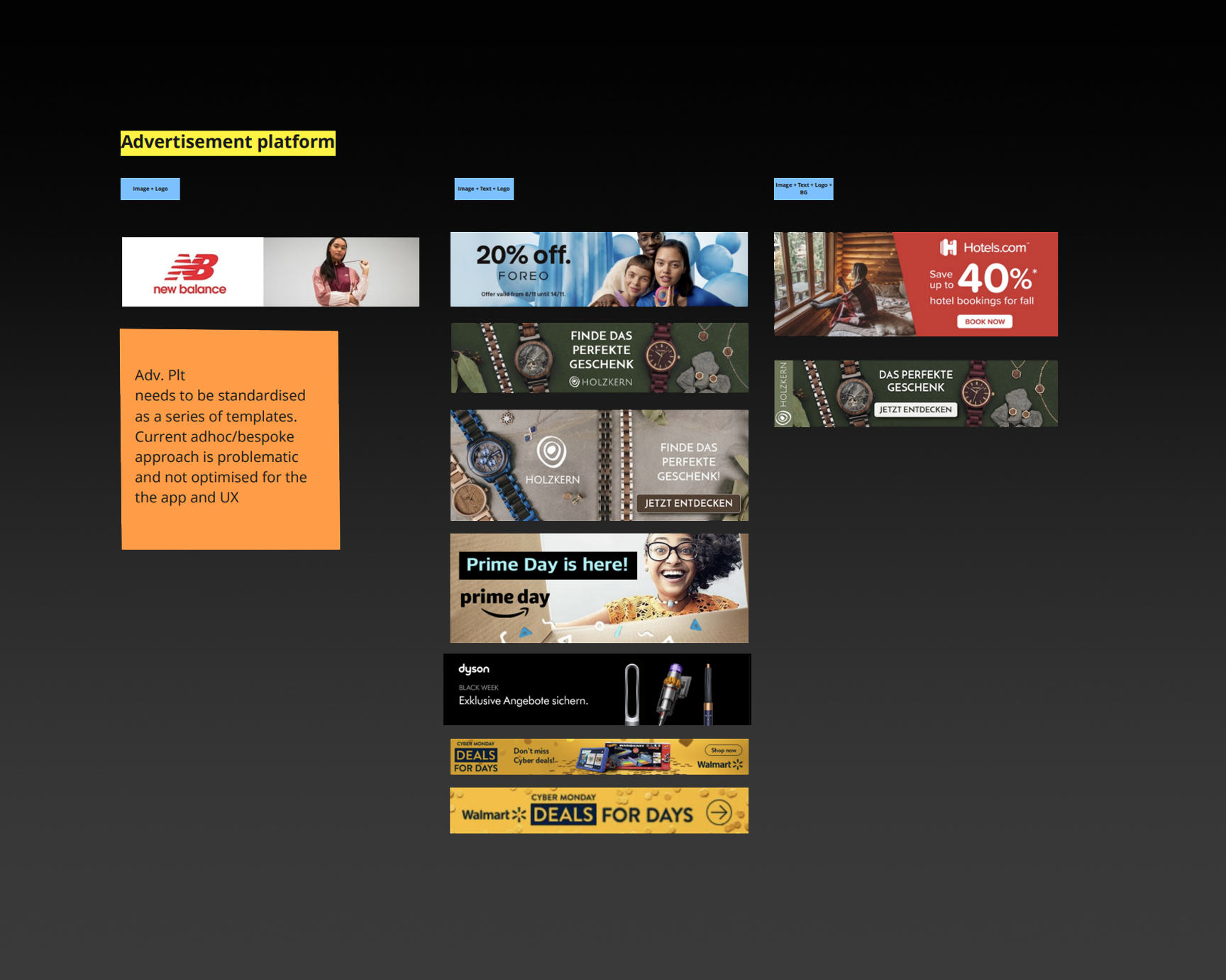
Through my work, I have observed a consistent pattern among development teams wherein they tend to focus solely on a particular aspect of the customer flow. This results in ad managers having to repeatedly input nearly 80% of the same data. This arduous and time-consuming process can be especially challenging for smaller merchants, often leading to a month-long delay in publishing a campaign due to the manual labor involved.
PUBLISHING PLATFORMS
(Instagram, FB, Klarna, etc.)
(Instagram, FB, Klarna, etc.)
A vital aspect of marketing is the effective management and distribution of ads on multiple platforms, like Instagram and Facebook. To optimize this process, I collaborated closely with the Ads Publishing team to gather insights on user needs and identify areas for enhancement.
DISCOVERY OF
RESOLUTIONS TO SUPPORT
RESOLUTIONS TO SUPPORT
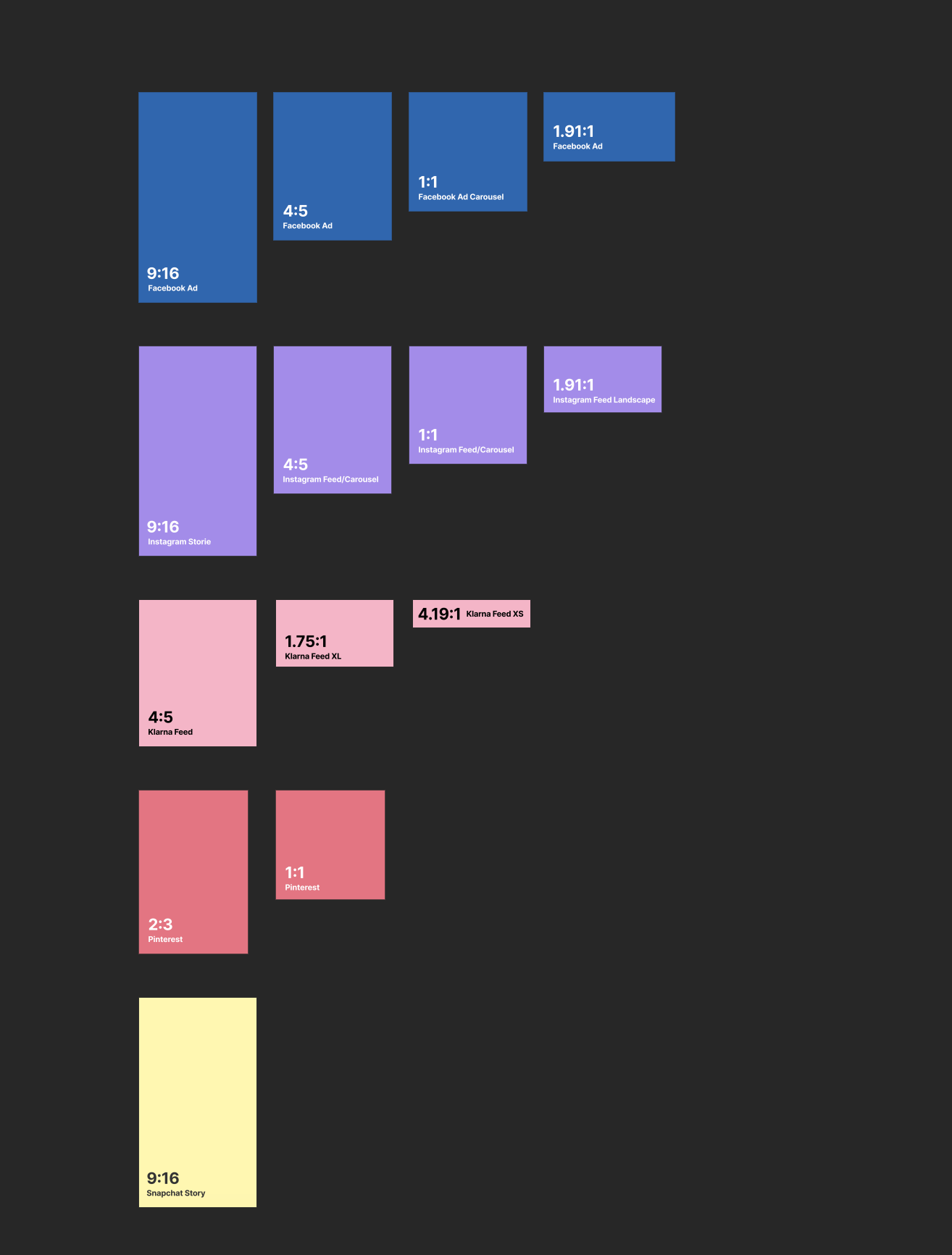
As I was conducting my product research, I delved deep into the prevalent ad banner resolutions on different popular platforms. This was a crucial step that greatly aided my research process. It enabled me to:
• Gain a better understanding of customer needs
• Align with market trends
• Improve product-market fit
• Stand out from competitors
• Inform the product roadmap and prioritization.
CONTENT
CREATION RESEARCH
CREATION RESEARCH
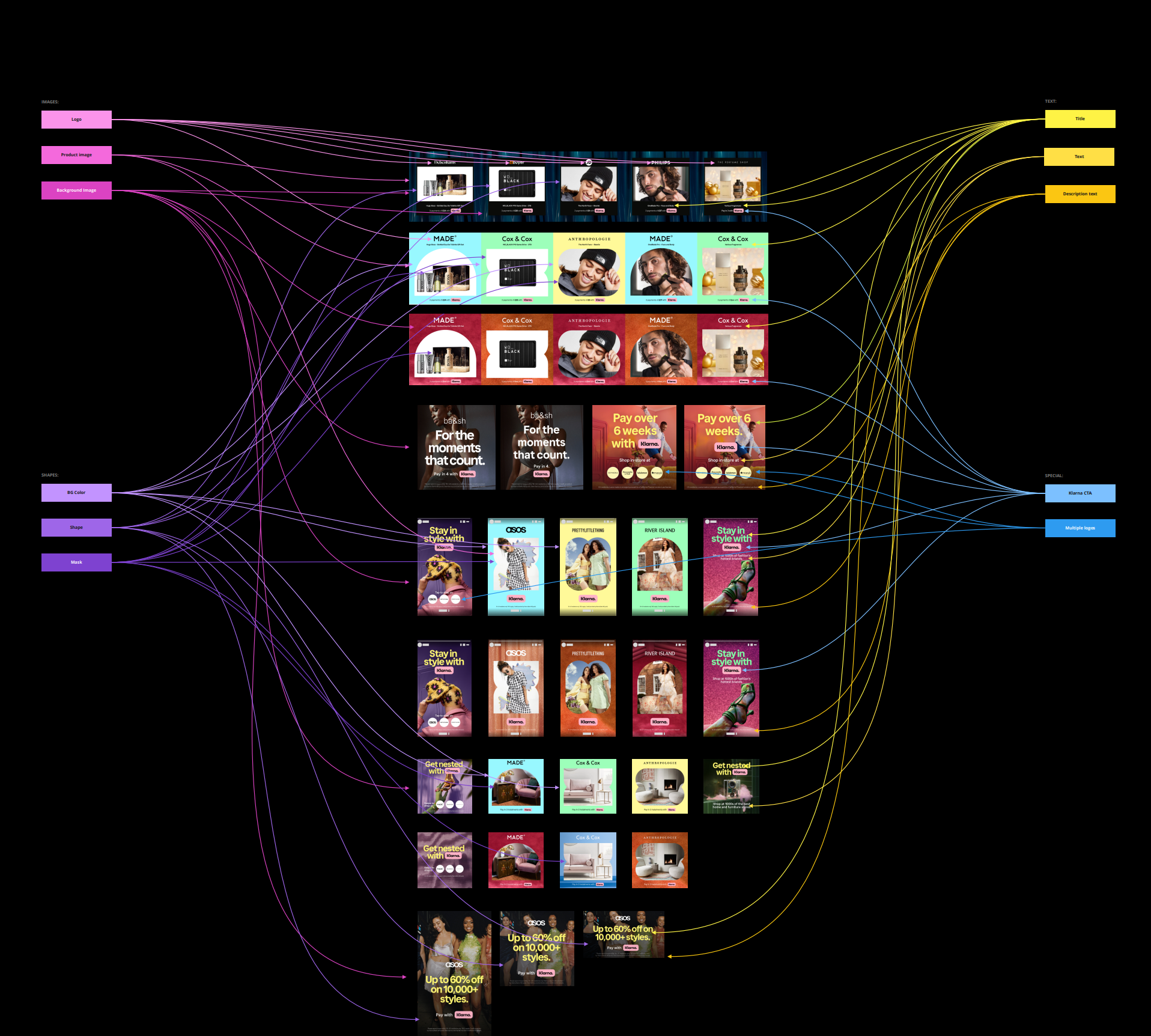
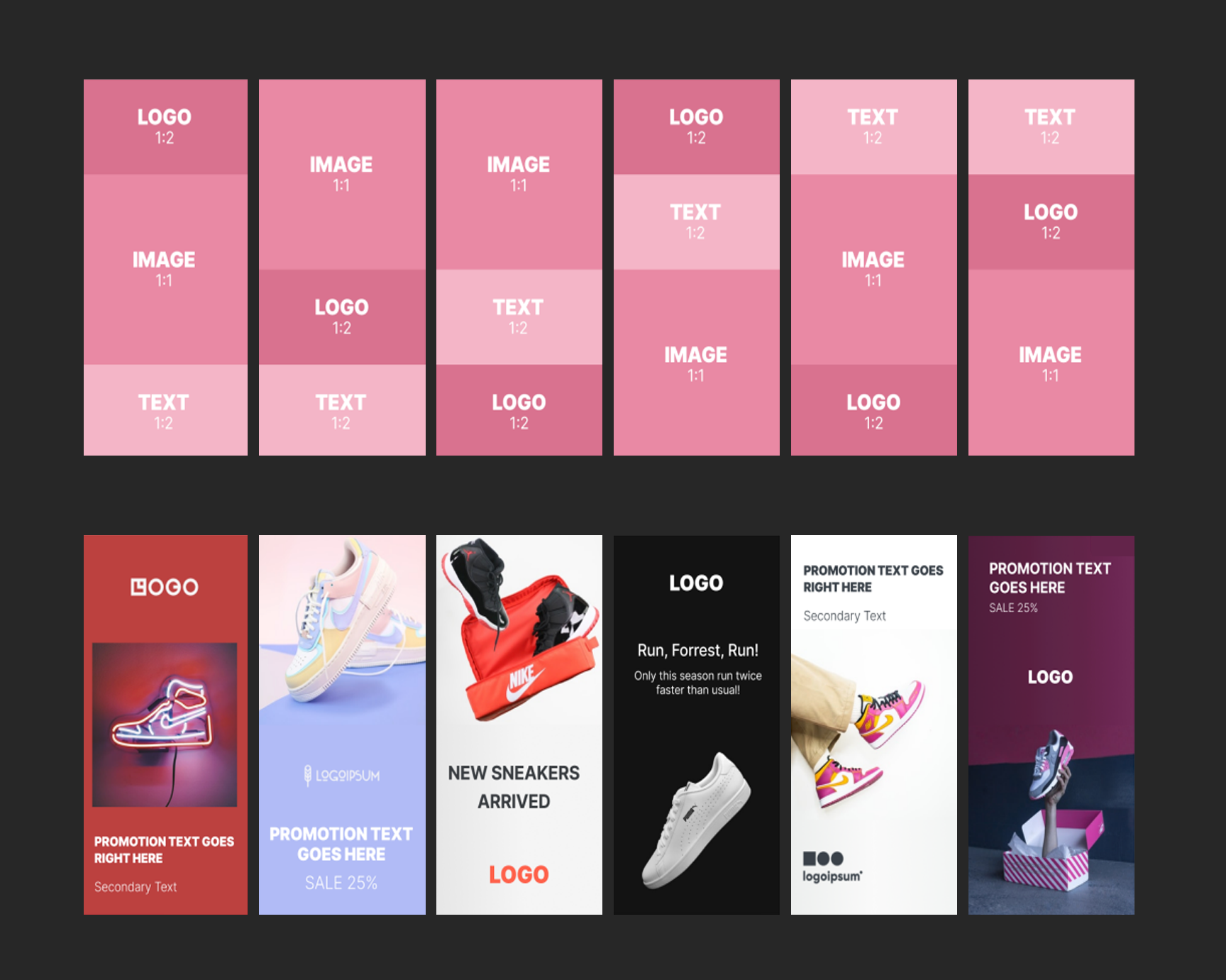
Another aspect I was researching is the creative ad templates. The templates are highly useful for Klarna's business users (and were mentioned multiple times during user research), enabling them to create visually appealing and effective ads with ease on a scale. Advanced usage of ML and AI in the future can provide an opportunity to create personalized offerings for each merchant's customer.
Besides the use of templates create value through:
• Time-saving and efficiency
• Consistency in branding
• Design Guidance
• Design Inspiration
• Adaptable for various formats and channels
• Aids A/B testing
• Time-saving and efficiency
• Consistency in branding
• Design Guidance
• Design Inspiration
• Adaptable for various formats and channels
• Aids A/B testing
4.
SOLUTION
OVERVIEW
OVERVIEW
WIREFRAMES
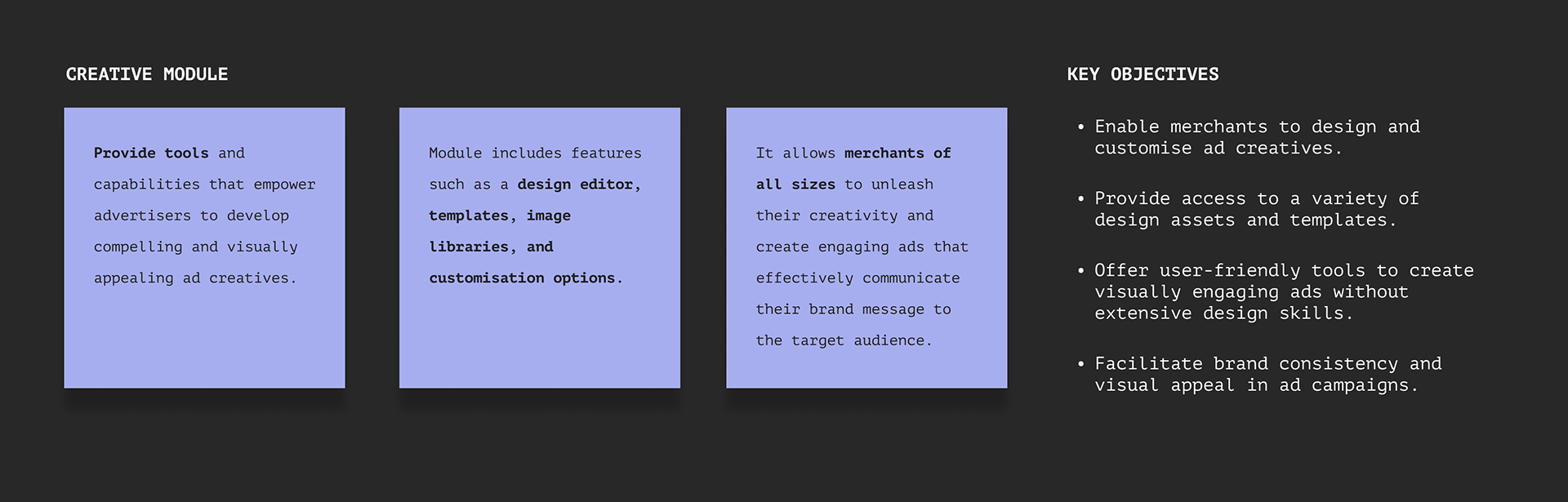
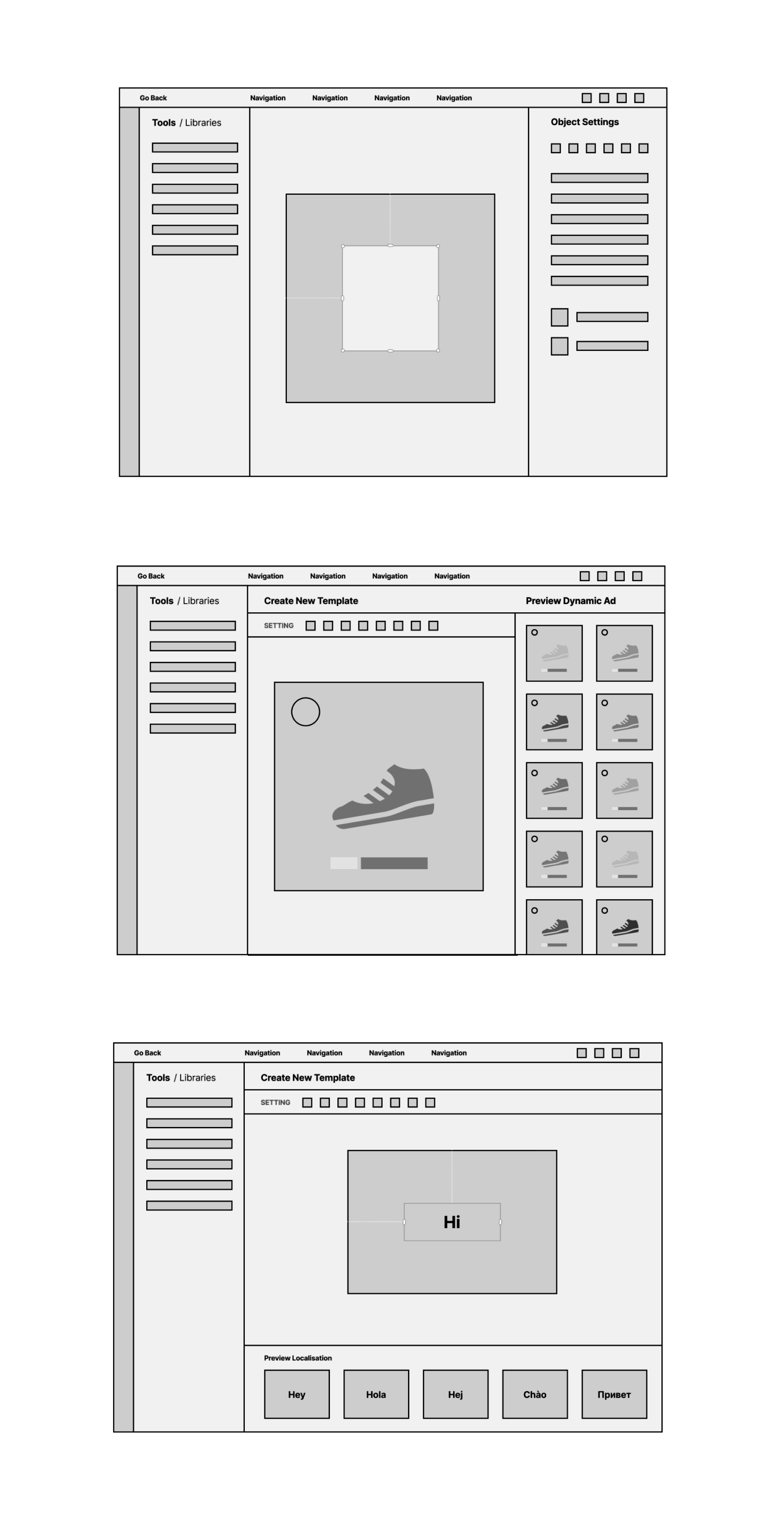
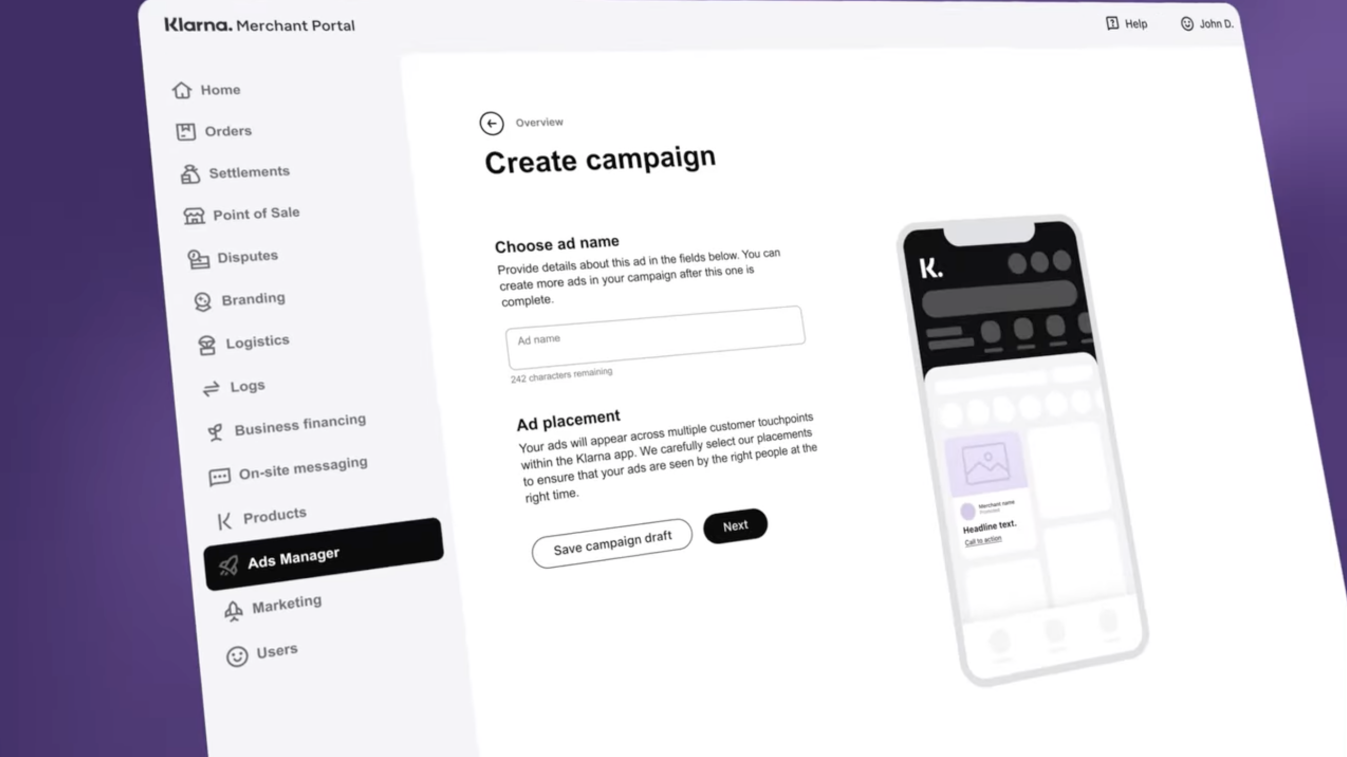
I am feeling quite confident as I get ready to present to the stakeholders. I have put together a set of wireframes to showcase the full range of system capabilities, along with several different layout options based on identified components and workflows.
Creating the first raw wireframes early in the discovery stage also helps visualize and refine initial concepts, facilitates communication and collaboration, identifies usability issues, validates requirements, and saves time and costs in the product development process. It enables a user-centered and iterative approach, leading to a more effective and successful final product.
Creating the first raw wireframes early in the discovery stage also helps visualize and refine initial concepts, facilitates communication and collaboration, identifies usability issues, validates requirements, and saves time and costs in the product development process. It enables a user-centered and iterative approach, leading to a more effective and successful final product.
GROWTH
OPPORTUNITY
OPPORTUNITY
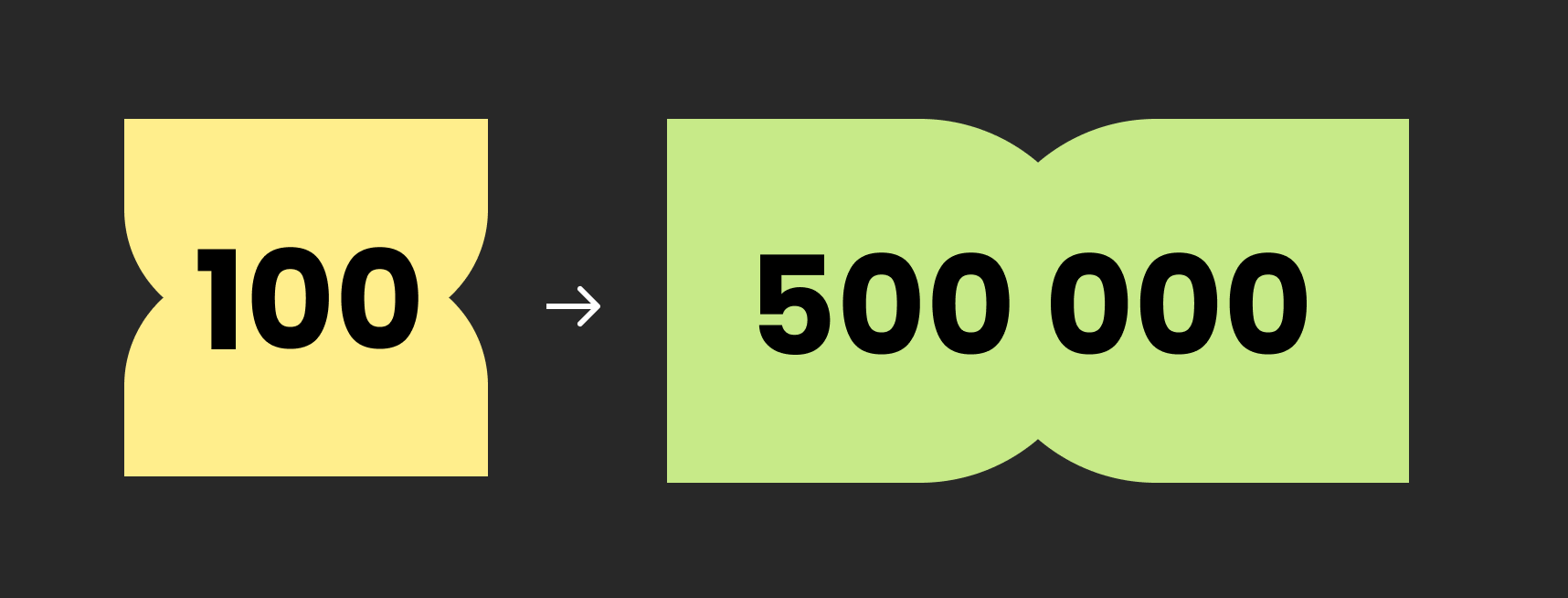
With this collaborative tool for generative, personalized ad content creation and management on a scale solution, Klarna will be able to serve a much larger range of merchants, from their top 100 to all 500,000 of their merchants, with new capability.
5.
COLLABORATION
AND ALIGNMENT
AND ALIGNMENT
AGILE
COLLABORATION
COLLABORATION
The development of this project has been closely coordinated with the marketing, engineering, content design, and content curation teams to guarantee its progressive advancement. My responsibilities involve establishing cross-functional collaboration, clear roles and responsibilities, an agile and iterative approach, user-centricity, documentation and shared understanding, regular check-ins and reviews, and continuous communication and transparency.
Because I wasn't supporting product until the lunch my collaboration was focused on discovery and advocating the product to key stakeholders. I was focusing on collaboration best practices and agile techniques.
Because I wasn't supporting product until the lunch my collaboration was focused on discovery and advocating the product to key stakeholders. I was focusing on collaboration best practices and agile techniques.
Cross-functional collaboration
Encourage open communication, regular meetings, and shared documentation to ensure everyone is aligned on the product vision, goals, and requirements.
Establish clear roles and responsibilities
Defined and communicating clear roles and responsibilities for each team member helped to avoid confusion and overlap.
User-centric mindset
User centricity is one of the most important principles at Klarna. Conducting user research, gathering customer feedback, and involving users in usability testing to inform decision-making is a must-have for a culture.
Encourage open communication, regular meetings, and shared documentation to ensure everyone is aligned on the product vision, goals, and requirements.
Establish clear roles and responsibilities
Defined and communicating clear roles and responsibilities for each team member helped to avoid confusion and overlap.
User-centric mindset
User centricity is one of the most important principles at Klarna. Conducting user research, gathering customer feedback, and involving users in usability testing to inform decision-making is a must-have for a culture.
Documentation and shared understanding
Early on we started working on creating and maintaining documentation that captures the product vision, requirements, and design decisions. Writing a pre-read is a common practice among Klarna's teams, so I also used it to help maintain productive meetings.
Continuous communication and transparency
Establishing open and transparent communication channels within the team and with stakeholders is crucial for 0-to-1 development teams.
Encourage regular status updates, share progress reports, and address any roadblocks or challenges promptly. Facilitate open discussions, create an environment where ideas and concerns can be openly shared, and foster a culture of collaboration and trust.
Early on we started working on creating and maintaining documentation that captures the product vision, requirements, and design decisions. Writing a pre-read is a common practice among Klarna's teams, so I also used it to help maintain productive meetings.
Continuous communication and transparency
Establishing open and transparent communication channels within the team and with stakeholders is crucial for 0-to-1 development teams.
Encourage regular status updates, share progress reports, and address any roadblocks or challenges promptly. Facilitate open discussions, create an environment where ideas and concerns can be openly shared, and foster a culture of collaboration and trust.
6.
LAUNCH
AND RESULTS
AND RESULTS
After I secured stakeholder buy-in and shaped the product's direction through discovery, the team resourced up to take it into build. I moved to a different initiative ahead of launch, which shipped in April 2023 with the technical modules and platform support I'd scoped during discovery. The platform went on to reach 70K+ advertisers, with CTRs up to 25× industry benchmarks and a contribution to 131% YoY marketing revenue growth
7.
GOING
FORWARD
FORWARD
LESSONS
LEARNED
LEARNED
Being a person who saw a business opportunity and by presenting it became an "Acting Product Manager" I personally learned a lot of valuable lessons.
User research is essential
Conducting thorough user research early in the project is crucial for understanding the needs, pain points, and expectations of our target users.
Clear communication is vital
Effective communication among team members, stakeholders, and clients is key to maintaining alignment and avoiding misunderstandings.
Flexibility and adaptability are necessary
Being open to change and willing to adapt plans and strategies when needed is important in a dynamic project environment.
Conducting thorough user research early in the project is crucial for understanding the needs, pain points, and expectations of our target users.
Clear communication is vital
Effective communication among team members, stakeholders, and clients is key to maintaining alignment and avoiding misunderstandings.
Flexibility and adaptability are necessary
Being open to change and willing to adapt plans and strategies when needed is important in a dynamic project environment.
Collaboration drives success
Encouraging cross-functional collaboration and fostering a collaborative culture among team members is crucial. When diverse perspectives and expertise are brought together, it leads to better problem-solving, innovative ideas, and improved outcomes for the project.
Project management discipline is critical
Applying effective project management practices, such as setting clear goals, defining milestones, and monitoring progress, is vital for keeping the project on track.
Customer-centric focus drives value
Keeping a customer-centric mindset throughout the project, prioritizing user needs and feedback helps create a product that delivers true value to our target audience.
Encouraging cross-functional collaboration and fostering a collaborative culture among team members is crucial. When diverse perspectives and expertise are brought together, it leads to better problem-solving, innovative ideas, and improved outcomes for the project.
Project management discipline is critical
Applying effective project management practices, such as setting clear goals, defining milestones, and monitoring progress, is vital for keeping the project on track.
Customer-centric focus drives value
Keeping a customer-centric mindset throughout the project, prioritizing user needs and feedback helps create a product that delivers true value to our target audience.
CONCLUSION
I will leverage the lessons learned, maintaining a customer-centric mindset and fostering collaboration to ensure the product's continued success.
I am grateful for the support and dedication of the entire team throughout this project. Their expertise and contributions have been instrumental in delivering a high-quality product that addresses the needs of our users. I am proud of what we have accomplished together.
This project marks a significant milestone in my professional journey, reinforcing my passion for product development.

Looking at this today: if I were scoping this platform now, generative AI would change where the effort goes — creative generation and ad variant testing could be largely AI-assisted, shifting design focus toward guardrails, quality control, and merchant-facing controls for how much automation they trust. That's a different design problem than the one I solved in 2022, and one I'd want to design for explicitly.